
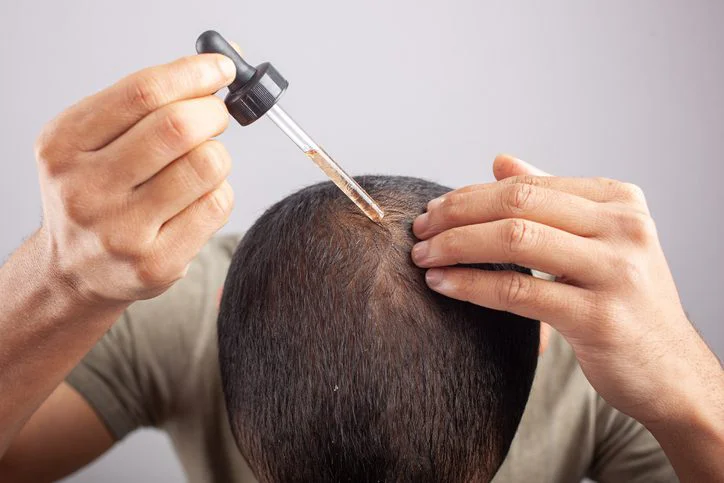







Hair Clinic in Gurgaon

Most Trusted Hair Transplant Clinic in India
Hairs Restored Globally
Hairs Restored Globally
There’s a reason we’re setting the standard in hair restoration across Australia, India, and Latin America
At Evolved, we take pride in our clinics spanning across 3 continents (India, Australia and Latin America) led by our Medical Director, Dr Ajay Dubey, with over 20 years of hair transplant experience and an International Trichologist, Paul Green, with more than 30 years of experience in advising on hair and scalp issues — we’re committed to excellence in every hair we regrow.
Unlike many other clinics in Lucknow, every procedure at Evolved is exclusively led and performed by qualified doctors, following Australian safety protocols and NMC (National Medical Council) guidelines.
We’re more than just a clinic – we are a global leader in hair restoration. Join the thousands who have trusted us to live a fuller, more confident life.
Technique
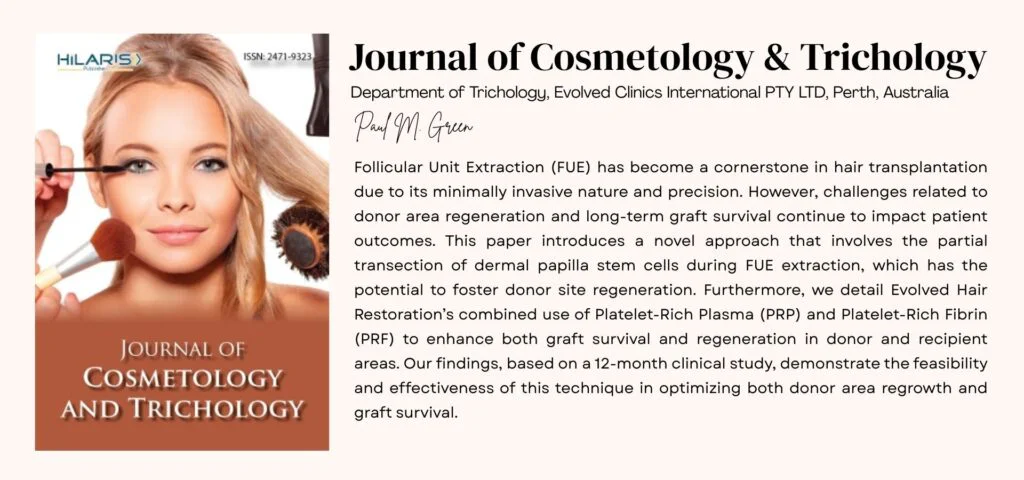
FUT vs FUE vs Direct (Advanced Implanter Technique)
| Area | Parameter | FUT Technique | FUE Technique | Evolved’s Direct Technique |
|---|---|---|---|---|
| Extraction | Method | Surgical strip removal | Grafts removed via reusable punches | Grafts removed via single-use, imported micro-punches |
| Invasiveness and Level of Pain | Highly painful – cutting & sutures | Moderate pain | Pain-free | |
| Who Performs Extraction? | Technicians / Nurses | Technicians / Nurses | Only qualified Doctor | |
| Scarring | Linear scar | Dot-like scars | Undetectable scars | |
| Graft Preservation | Graft Exposure Time and Survival | <60% | 70–80% | ~100% |
| Implantation | Method | 2 steps slit method | 2 steps slit method | 1 step with Choi implanter |
| Who Inserts the Follicles? | Technicians / Nurses | Technicians / Nurses | Only qualified Doctors | |
| Angle, Depth, Direction Control | No control due to technician involvement | No control due to technician involvement | 100% Doctor-led precise control | |
| Recovery Time | ~2 months | ~2 weeks | ~2 days |
Technique
Hair Clinic in Gurgaon: A Field Guide to Reading the Signals
Choosing a hair clinic in Gurgaon is a bit like being a naturalist in unfamiliar terrain. The environment is full of signals, some reassuring, some warning, and knowing how to read them is what keeps you safe. Most patients don’t know which signals matter, so they judge clinics on the wrong ones. This field guide teaches you to read the signals that actually indicate a quality hair clinic, and to spot the ones that should send you looking elsewhere.
Signal Category One: How the Clinic Diagnoses
The first signals to read appear in the consultation, and they reveal whether a clinic is medical or merely commercial.
Reassuring signals:
- A physical scalp examination, ideally under magnification
- A pull test to check active shedding
- Questions about family history and progression
- An honest read of whether your follicles are active or gone
Warning signals:
- A price quoted before any examination
- A treatment recommended within minutes
- The same recommendation given to seemingly everyone
At Evolved Hair, diagnosis is performed directly by the doctor, so the person reading these signals for your scalp is the one accountable for your plan. A clinic that diagnoses before recommending is displaying the strongest reassuring signal there is.
Signal Category Two: How the Clinic Talks About Surgery
The next signals reveal whether a clinic prioritises your outcome or its revenue.
Reassuring signal: the clinic discusses non-surgical options for early-stage cases:
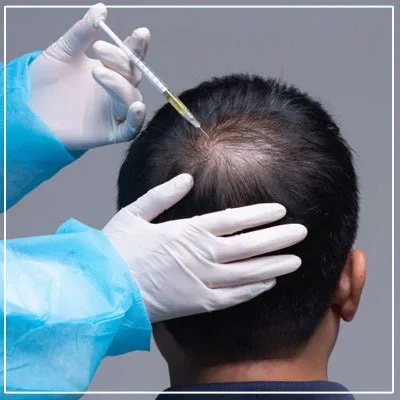
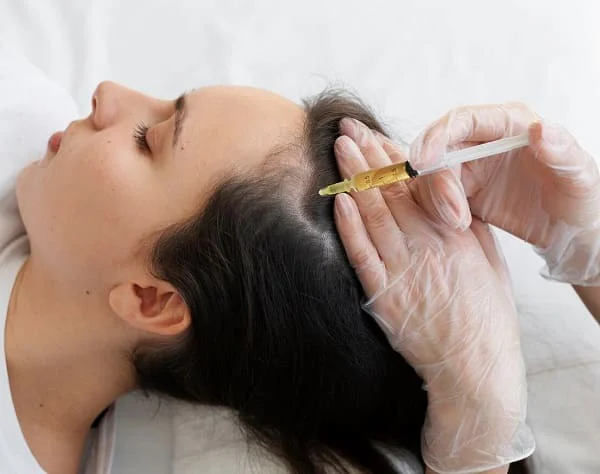
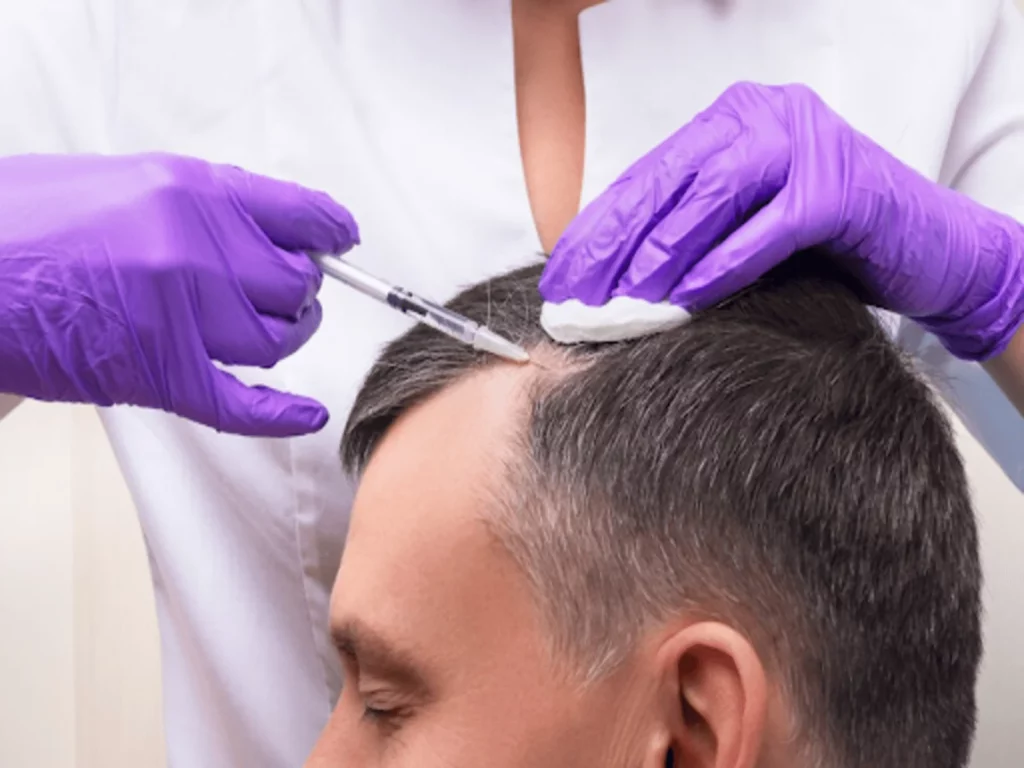
- PRP (Platelet Rich Plasma): concentrates platelets from your own blood to support weakened follicles
- GFC (Growth Factor Concentrate): a blood-derived nourishment therapy, explained on our GFC page
- QR678: an injectable growth factor treatment for underperforming follicles
- Exosome therapy: delivers concentrated cell-signalling molecules to dormant follicles to encourage regeneration, a newer non-surgical option your doctor can evaluate based on your loss pattern and stage
Warning signal: surgery pushed on every patient, regardless of stage, with non-surgical options never mentioned.
A clinic willing to tell you that you don’t need surgery yet is showing you it can be trusted.
Signal Category Three: Who Performs the Surgery
This is the most important signal, and the one clinics most often obscure.
Reassuring signal: a clear answer that the doctor performs the entire procedure. At Evolved Hair, the entire procedure is performed end-to-end by the doctor, with no nurses involved in any stage of the surgery.
Warning signal: vague references to “the team” or “trained staff” when you ask who operates.
The reason this signal matters most: the best result isn’t determined by the branded name of a technique; it’s determined by who performs the critical steps, how carefully grafts are handled, and how naturally the procedure is planned.
Signal Category Four: How the Clinic Explains Techniques
A quality clinic reads clearly on this signal, explaining options without hiding behind jargon:
| Technique | Description & Procedure Details |
|---|---|
| FUT (Follicular Unit Transplantation) | A donor strip is cut and dissected into follicular units. An archaic technique, but it results in a linear scar. Implantation is performed in two steps, with slits and forceps, leading to very little control over angle, depth and direction. |
| FUE (Follicular Unit Extraction) | Individual follicle extraction is performed with a fine punch. No linear scars. But implantation is performed similarly to that of FUT. |
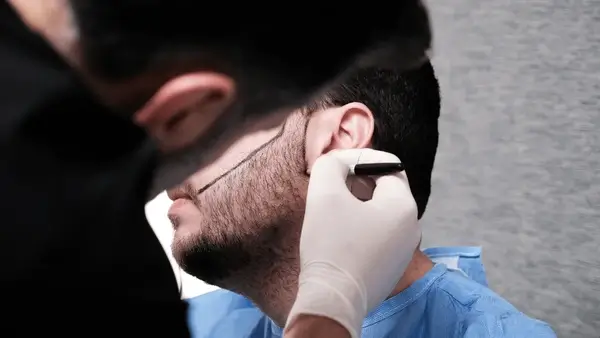
| Direct Hair Transplantation | Also known as the Direct Technique or Modified FUE, where precise angle and depth are achieved through a specialised, imported Choi implanter. Grafts are implanted one-by-one using a Choi implanter without the need for making any slits. Extraction of follicles is similar to that in the FUE technique. Overall, this is a more advanced technique than FUE and FUT, with virtually no scars and faster healing. |
Signal Category Five: How the Clinic Sets Expectations
The signals here reveal honesty.
Reassuring signals:
- Shedding after the procedure explained as normal
- Growth described as developing over 9 to 12 months
- Outcomes acknowledged as varying by individual
Warning signals:
- Promises of instant or guaranteed results
- Before-and-after galleries presented as promises rather than illustrations
Signal Category Six: How the Clinic Handles Complexity
A clinic’s response to hard cases is a strong quality signal.
Reassuring signal: confidence with advanced baldness planning and hair transplantation repair, correcting previous unsatisfactory procedures, which has the smallest margin for error.
Warning signal: only routine cases handled, with no repair experience.
Signal Category Seven: How the Clinic Treats Your Time
Finally, read how the clinic treats your decision.
Reassuring signals: encouragement to take your time, welcoming a second opinion.
Warning signals: pressure to book immediately, same-day discounts tied to commitment.
A clinic that respects your time respects you.
Reading the Signals for Female Patients
If you’re a woman, one signal deserves special attention: whether the clinic recognises that female hair loss is usually diffuse rather than a receding hairline, planning accordingly. Our female hair transplant page explains why. For structured male pattern planning benchmarks, our male hair transplant page is a useful reference.
Putting the Field Guide to Use
Take this guide into every consultation. Read each category of signal, reassuring versus warning, and tally what you find. A clinic showing mostly reassuring signals across diagnosis, honesty, surgeon involvement, and expectation-setting is a safe choice. One showing warning signals, however polished its environment, is terrain to leave.
The Bottom Line
Choosing a hair clinic in Gurgaon is about reading the right signals, not the obvious ones. Polished interiors and confident marketing are surface features. The signals that matter live in how a clinic diagnoses, whether it discusses non-surgical options, who performs the surgery, how it explains techniques, and whether it sets honest expectations. Learn to read these signals, and you’ll navigate the terrain confidently to a clinic worth trusting.
Frequently Asked Questions
What’s the strongest reassuring signal from a clinic?
A proper diagnosis, including a scalp examination, before any price is quoted.
What’s a major warning signal?
A price quoted before any examination, or surgery pushed regardless of your stage.
How do I read the signal about who operates?
Ask directly; a clear answer that the doctor operates end-to-end is reassuring.
Should a clinic discuss non-surgical options?
Yes, mentioning PRP, GFC, exosomes, or QR678 for suitable cases is a reassuring signal.
Is pressure to book quickly a warning signal?
Yes, a good clinic encourages you to take your time and welcomes second opinions.
Does repair case experience signal quality?
Yes, confidence with repair and advanced cases indicates genuine surgical depth.
Common Reasons for Hair Loss in Gurgaon
High Pollution Levels
Hard Water Supply
Stress & Busy Lifestyle
Nutritional Deficiencies
Genetic Hair Loss
Hormonal Imbalances
Scalp Conditions & Medical Treatments
Meet Our Clinics and Hair Loss Experts
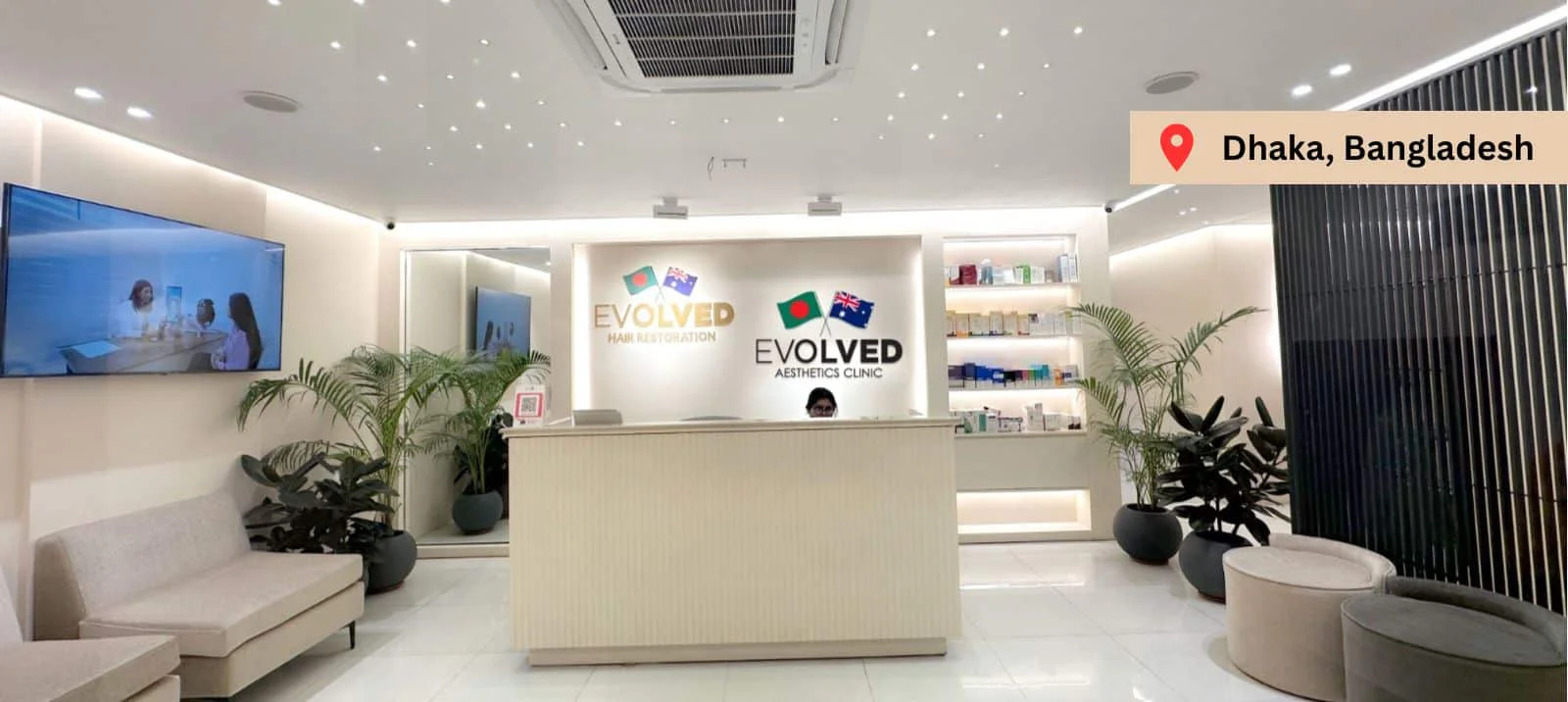
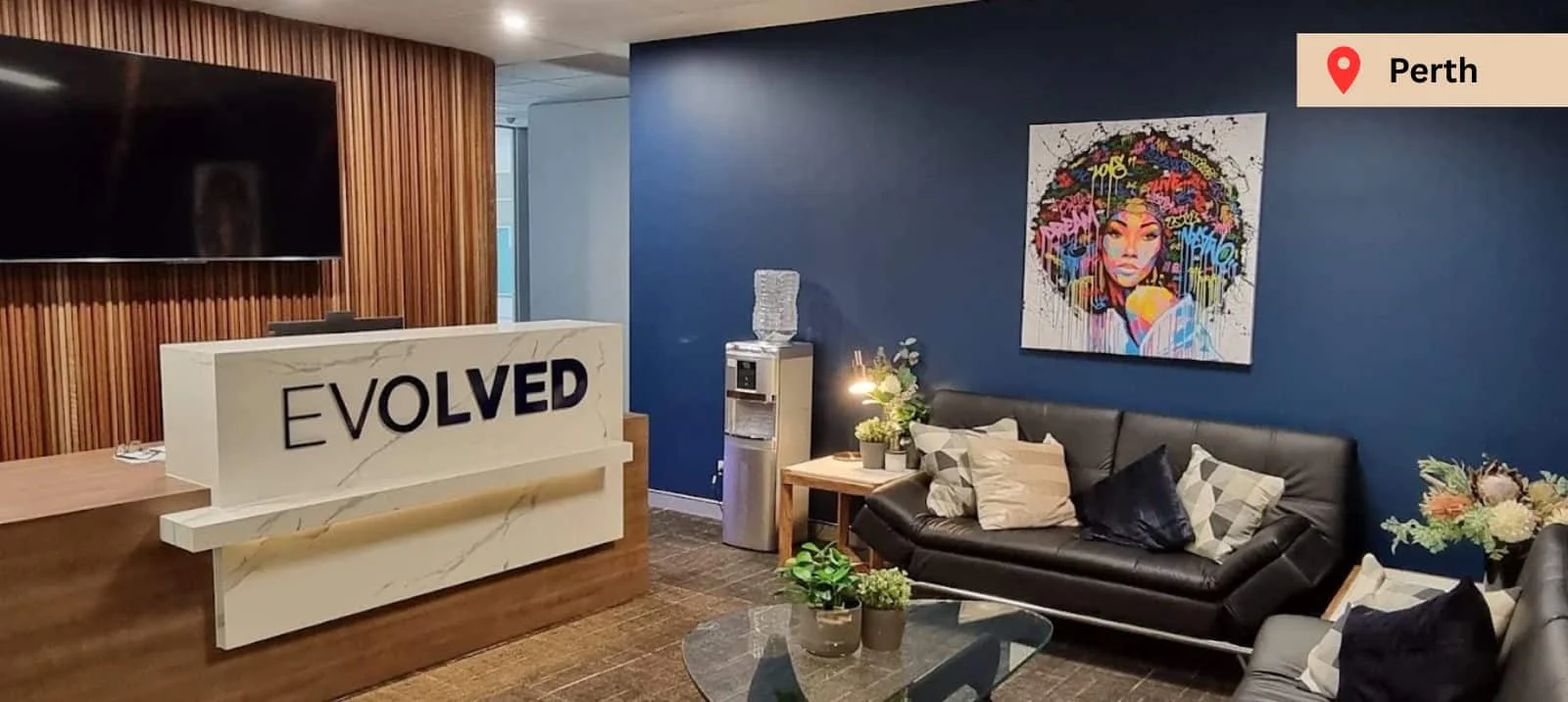
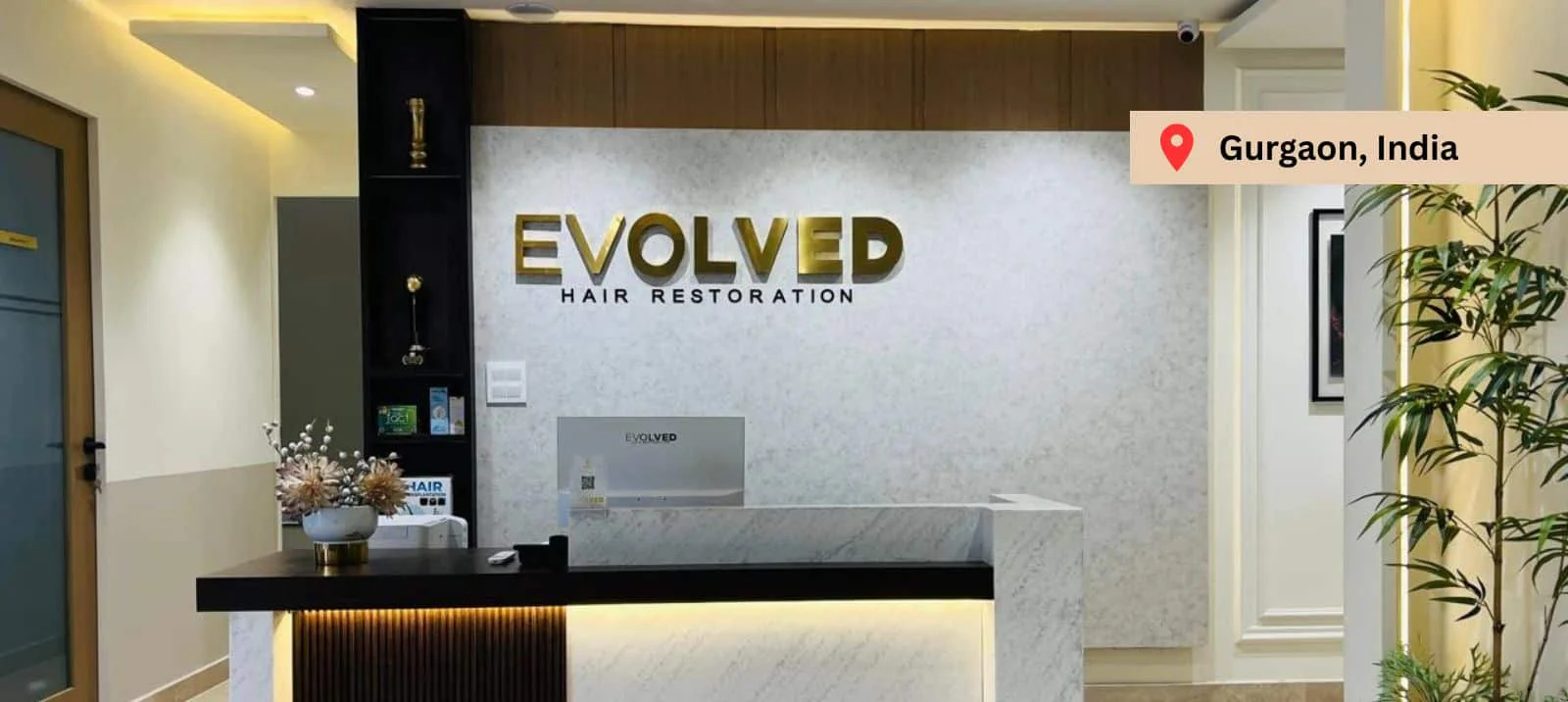
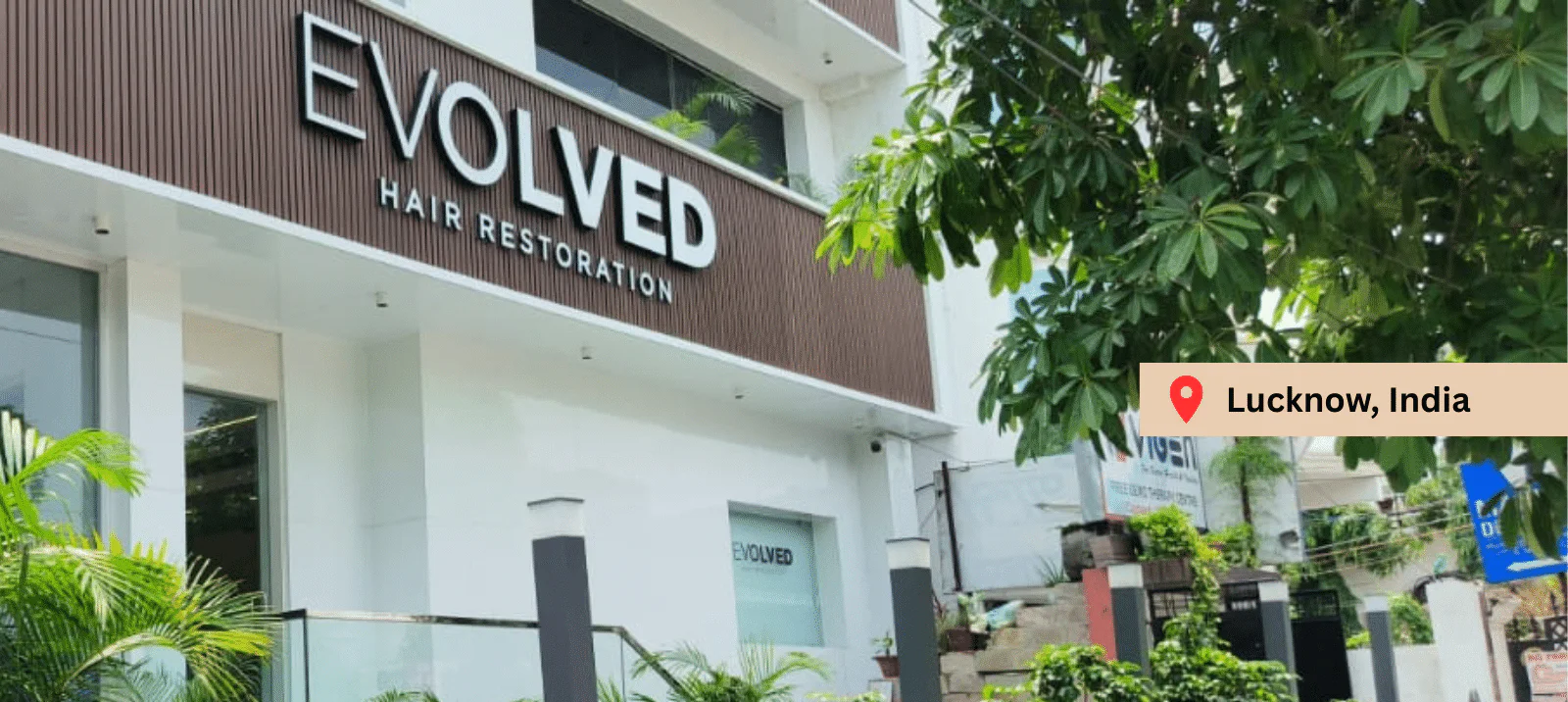
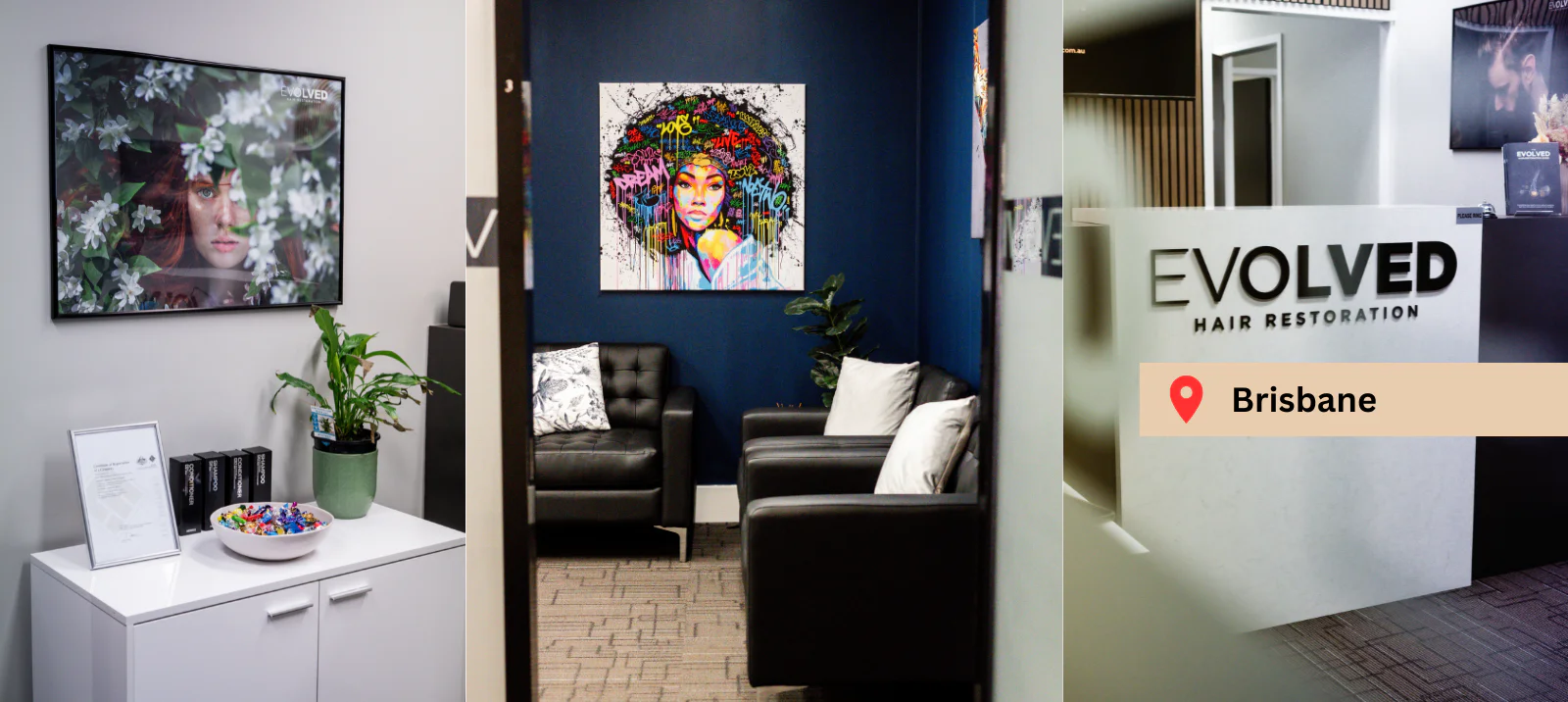
At Evolved Hair India, priority is given to the skills of our doctors and quality of treatment in our clinics. Each procedure is performed entirely from start to finish by experienced, qualified trained medical doctors (not assistants or technicians) to ensure that patients are always safe in their hands. Our direct technique is the most advanced in the world and provides the most natural results. The clinic infrastructure is high-tech, with rigid Australian standards of safety, and use the most sterile conditions to provide a comfortable and safe experience for all patients. It is this dedication to excellence in both clinical care and medical expertise that makes Evolved Hair India the go-to name in hair restoration.
Our Clinics
Our Doctors
Have Queries? - Get in Touch
Book Appointment
Our Blogs
Views on latest research, innovation technologies and best practices