






DHT and Hair Transplant in Gurugram

Most Trusted Hair Transplant Clinic in India
Hairs Restored Globally
Hairs Restored Globally
There’s a reason we’re setting the standard in hair restoration across Australia, India, and Latin America
At Evolved, we take pride in our clinics spanning across 3 continents (India, Australia and Latin America) led by our Medical Director, Dr Ajay Dubey, with over 20 years of hair transplant experience and an International Trichologist, Paul Green, with more than 30 years of experience in advising on hair and scalp issues — we’re committed to excellence in every hair we regrow.
Unlike many other clinics in Lucknow, every procedure at Evolved is exclusively led and performed by qualified doctors, following Australian safety protocols and NMC (National Medical Council) guidelines.
We’re more than just a clinic – we are a global leader in hair restoration. Join the thousands who have trusted us to live a fuller, more confident life.
Technique
FUT vs FUE vs Direct (Advanced Implanter Technique)
| Area | Parameter | FUT Technique | FUE Technique | Evolved’s Direct Technique |
|---|---|---|---|---|
| Extraction | Method | Surgical strip removal | Grafts removed via reusable punches | Grafts removed via single-use, imported micro-punches |
| Invasiveness and Level of Pain | Highly painful – cutting & sutures | Moderate pain | Pain-free | |
| Who Performs Extraction? | Technicians / Nurses | Technicians / Nurses | Only qualified Doctor | |
| Scarring | Linear scar | Dot-like scars | Undetectable scars | |
| Graft Preservation | Graft Exposure Time and Survival | <60% | 70–80% | ~100% |
| Implantation | Method | 2 steps slit method | 2 steps slit method | 1 step with Choi implanter |
| Who Inserts the Follicles? | Technicians / Nurses | Technicians / Nurses | Only qualified Doctors | |
| Angle, Depth, Direction Control | No control due to technician involvement | No control due to technician involvement | 100% Doctor-led precise control | |
| Recovery Time | ~2 months | ~2 weeks | ~2 days |
Technique
DHT and Hair Transplant in Gurugram: Clearing Up One of the Most Confused Searches in Hair Restoration
Type “DHT hair transplant Gurugram” into a search engine and you’re likely mixing up two completely different things without realising it. On one side sits DHT, the hormone that causes most hair loss. On the other sits the Direct Hair Transplantation technique, sometimes shortened in ways that get muddled with the hormone’s name. This confusion is so common that it’s worth untangling properly, because understanding the difference genuinely changes how you approach treatment in Gurugram. Let’s clear it up, piece by piece.
Two Very Different Things Sharing a Confusing Search
First, the untangling:
- DHT (dihydrotestosterone) is a hormone. It’s derived from testosterone and, in genetically sensitive people, it shrinks hair follicles over time, causing pattern hair loss.
- Direct Hair Transplantation, also called the Direct Technique or Modified FUE, is a surgical method. It’s a variation of Follicular Unit Extraction where a choi implanter is used to insert grafts in a single step, without making slits.
One is the problem. The other is a potential solution. They’re related only in that both concern hair loss, and the search phrase accidentally welds them together.
Understanding DHT: The Actual Cause of Most Hair Loss
Since DHT is where hair loss usually begins, it deserves proper explanation.
DHT binds to receptors in genetically sensitive scalp follicles and gradually shrinks them, a process called miniaturisation. Each growth cycle produces a finer, shorter, weaker hair until the follicle eventually stops producing visible hair altogether. This is the mechanism behind androgenetic alopecia, the most common form of hair loss.
Key points about DHT-driven hair loss:
- It’s largely genetic, which is why hair loss runs in families
- It’s about follicle sensitivity, not just how much DHT you have
- It progresses gradually, which is why early intervention matters
How DHT Connects to Your Treatment Options
Understanding DHT matters because it shapes which treatments make sense.
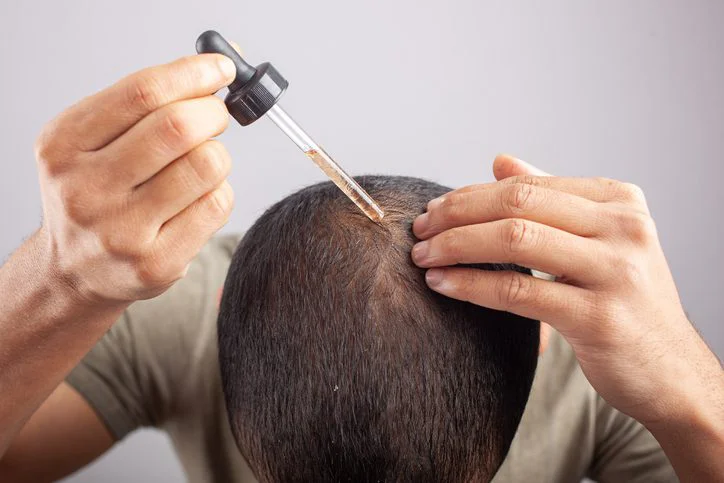
Medications that reduce DHT can slow or stabilise pattern hair loss by lowering the hormone’s effect on follicles. These work best while follicles are still active.
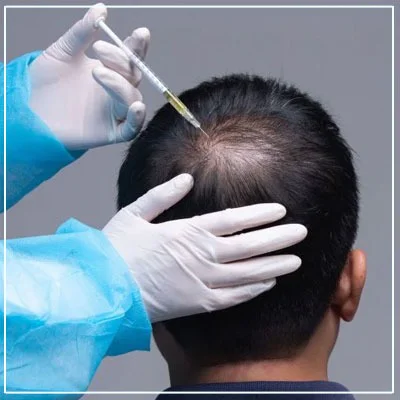
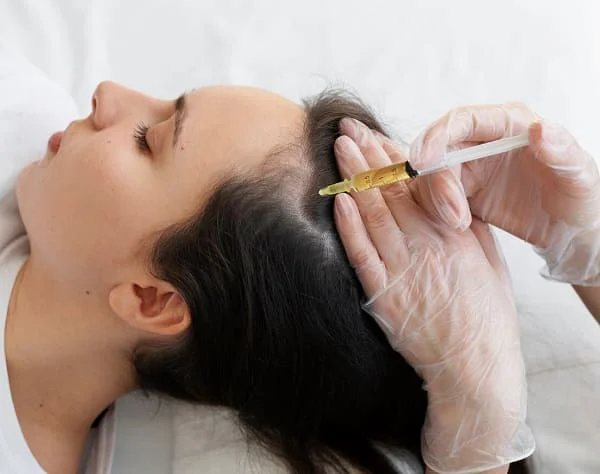
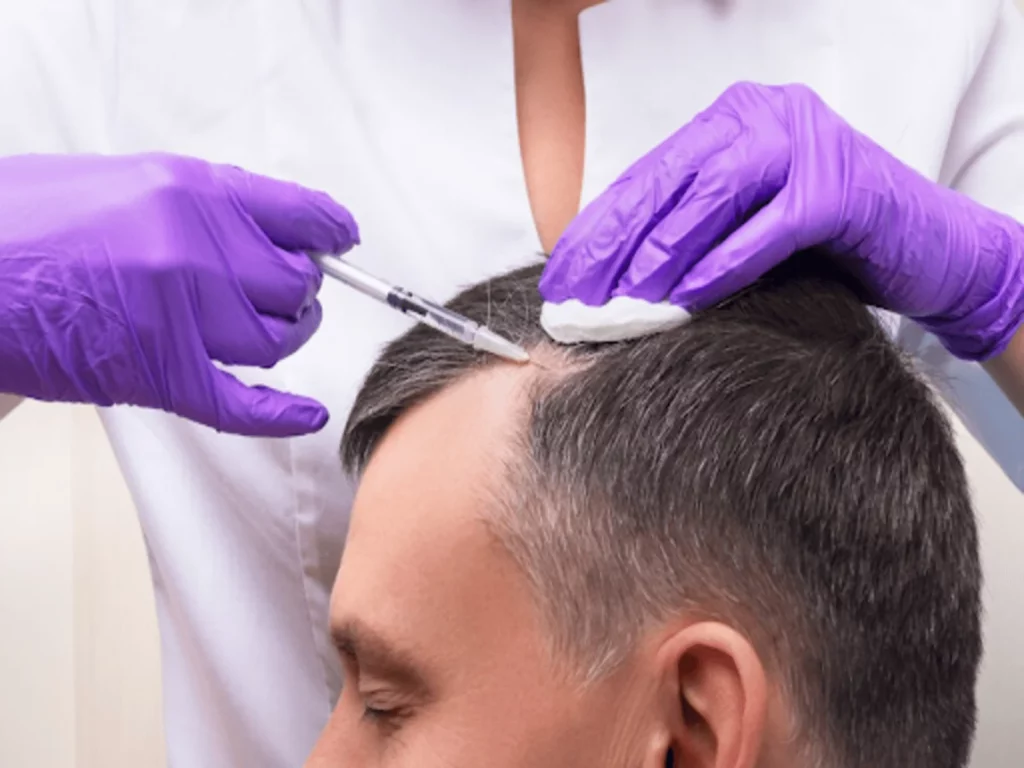
Non-surgical regenerative treatments support weakened follicles through separate mechanisms:
- PRP (Platelet Rich Plasma): concentrates platelets from your own blood to support weakened follicles
- GFC (Growth Factor Concentrate): a blood-derived nourishment therapy, explained on our GFC page
- QR678: an injectable growth factor treatment for follicles that are active but underperforming
None of these can revive follicles that DHT has already shut down entirely, which is where surgery enters.
Now the Other Half: Direct Hair Implantation as a Surgical Solution
When DHT has caused follicles to stop functioning in an area, no medication or injection will bring them back. That’s when surgical restoration becomes the realistic path, and this is where the Direct Hair Transplant technique comes in.
Direct Hair Transplantation, also called the Direct Technique or Modified FUE, involves:
- Extracting follicles individually from a donor area
- Implanting them using a specialised implanter tool (choi implanter) in a single step with the need of slits
- Precise control over the angle and depth of each implanted follicle
The Three Main Techniques, Explained
The Direct Technique is one of three main approaches, and a good clinic explains all of them:
| Technique | What It Involves | Notable For |
|---|---|---|
| FUT (Follicular Unit Transplantation) | Donor strip dissected into follicular units | High graft count cases |
| FUE (Follicular Unit Extraction) | Individual follicle extraction with a fine punch | Minimal, scattered scarring |
| Direct Hair Implantation (Transplantation) | Follicles implanted almost immediately after extraction | Precise angle control, reduced graft handling time |
No single technique is universally superior. Selection depends on your donor quality, graft requirement, and goals.
What Actually Determines a Good Result
Here’s the point that matters more than any technique name. The most defensible principle in hair restoration is this: the best result isn’t just determined by the branded name of a technique; it’s determined by who performs the critical steps, how carefully grafts are handled, and how naturally the procedure is planned.
At Evolved Hair, the entire procedure is performed end-to-end by the doctor, with no nurses involved in any stage of the surgery, which is one of the clinic’s primary differentiators. Whether you undergo the Direct Technique or standard FUE, the surgeon’s skill and graft handling also determine your result.
Bringing DHT and the Transplant Together
So how do these two halves connect in practice?
- DHT causes your hair loss by shrinking sensitive follicles over time
- Early stages may respond to DHT-reducing medication and regenerative treatments while follicles are active
- Advanced stages, where follicles have stopped functioning, call for surgical restoration
- Even after surgery, DHT keeps affecting non-transplanted areas, which is why some patients continue supportive treatment afterwards
Understanding this arc, from hormone to treatment to surgery, turns a confused search into a clear picture.
Why Diagnosis Ties It All Together
None of this should begin without a proper diagnosis. A good clinic examines your scalp, confirms whether DHT is driving your loss, and determines whether your follicles are still active. At Evolved Hair, this assessment is performed directly by the doctor, so the treatment recommendation follows genuine diagnosis rather than assumption.
A Note for Women
DHT can contribute to female hair loss too, though it usually presents as diffuse thinning rather than a receding hairline, and treatment planning differs from the start. Our female hair transplant page explains this distinction. For a benchmark on structured male pattern surgical planning, our male hair transplant page is a useful reference.
The Bottom Line
The search “DHT hair transplant Gurugram” accidentally combines a hormone and a surgical technique, but understanding the difference is genuinely useful. DHT is the cause of most hair loss; the Direct Hair Implantation technique is one surgical solution when that loss becomes advanced. What connects them is a proper, doctor-led diagnosis that identifies your stage and matches the right response, medication, regenerative therapy, or surgery, to your actual situation. Clear up the confusion, and your path forward becomes far clearer too.
Frequently Asked Questions
Is DHT the same as a hair transplant technique?
No, DHT is a hormone that causes hair loss, while the Direct Hair Implantation technique is a surgical method.
What does DHT do to hair?
It binds to sensitive follicles and gradually shrinks them until they stop producing visible hair.
Can treatment reduce DHT’s effect?
DHT-reducing medication and regenerative treatments can help while follicles are still active.
What is the Direct Hair Transplantion technique?
A variation of FUE where follicles are inserted in a single step with the use of choi implanter.
Which matters more, the technique or the surgeon?
The surgeon, since who performs the critical steps affects as much as the technique’s name.
Does DHT still affect hair after a transplant?
Yes, which is why some patients continue supportive treatment to protect non-transplanted areas.
Common Reasons for Hair Loss in Gurgaon
High Pollution Levels
Hard Water Supply
Stress & Busy Lifestyle
Nutritional Deficiencies
Genetic Hair Loss
Hormonal Imbalances
Scalp Conditions & Medical Treatments
Meet Our Clinics and Hair Loss Experts
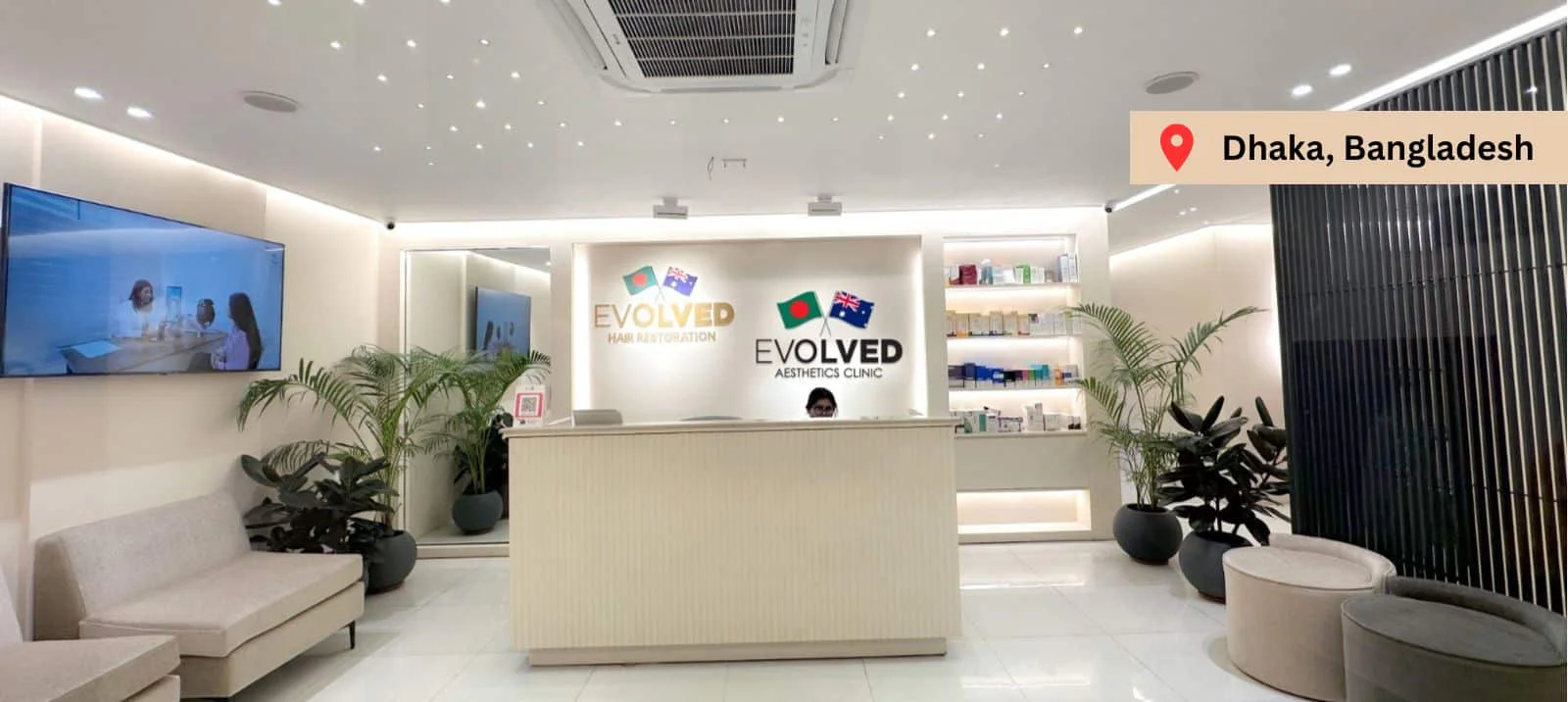
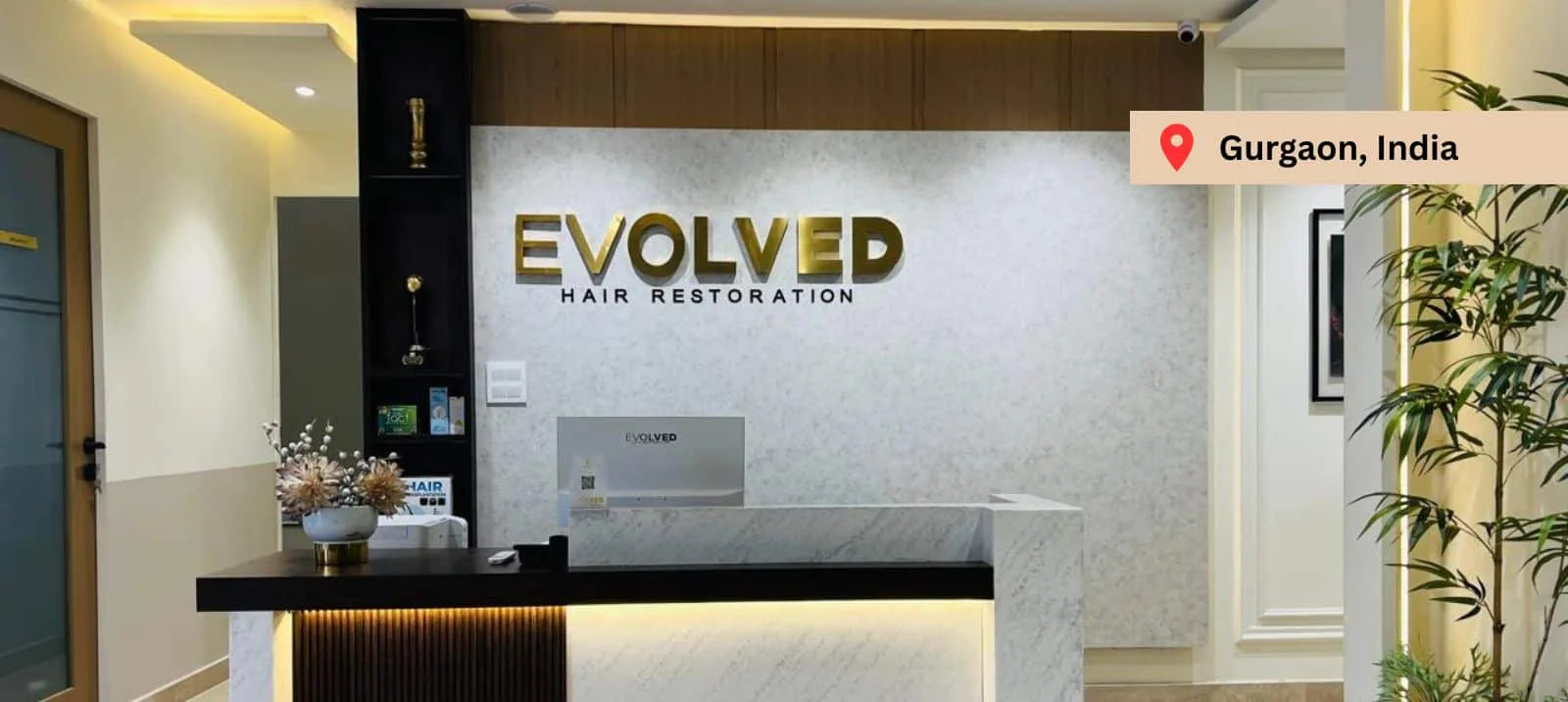
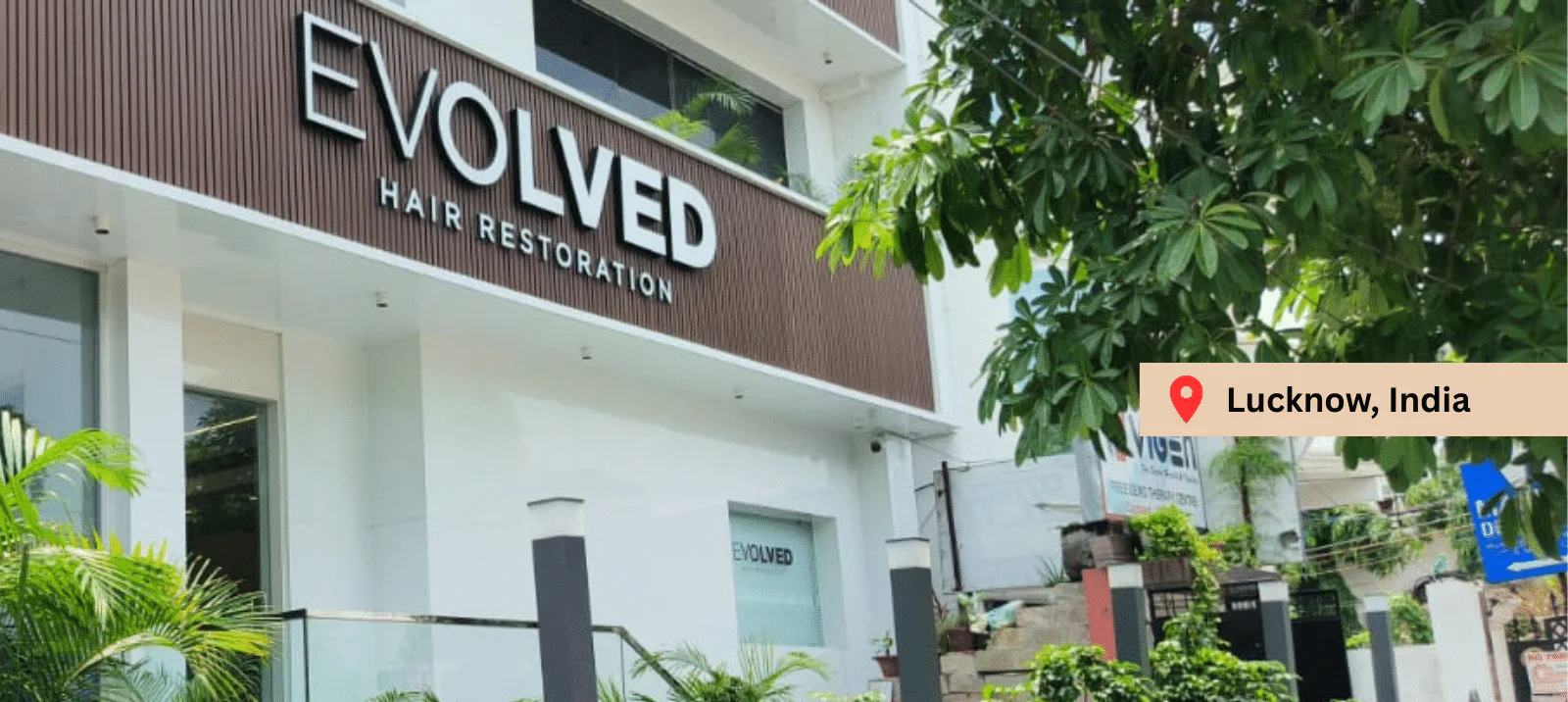
At Evolved Hair India, priority is given to the skills of our doctors and quality of treatment in our clinics. Each procedure is performed entirely from start to finish by experienced, qualified trained medical doctors (not assistants or technicians) to ensure that patients are always safe in their hands. Our direct technique is the most advanced in the world and provides the most natural results. The clinic infrastructure is high-tech, with rigid Australian standards of safety, and use the most sterile conditions to provide a comfortable and safe experience for all patients. It is this dedication to excellence in both clinical care and medical expertise that makes Evolved Hair India the go-to name in hair restoration.
Our Clinics


Our Doctors
Have Queries? - Get in Touch
Book Appointment
Our Blogs
Views on latest research, innovation technologies and best practices